Kawlata (Maltese Pork and Cabbage Soup)
A traditional Maltese winter stew with cabbage, seasonal vegetables, and pork. Rustic, hearty, and slow-simmered.
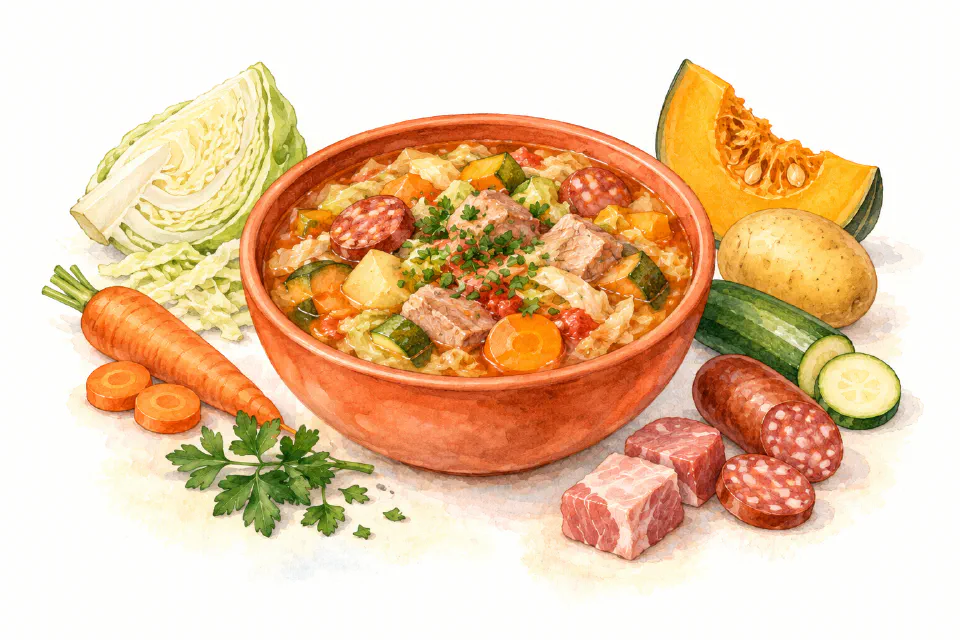
Ingredients
Have your ingredients ready? Go to instructionsMeasures: 1 tbsp = 15ml; 1 tsp = 5ml. For local ingredient names and substitutions, see our guide to Maltese ingredients abroad.
Instructions
- Brown the meat: Heat olive oil in a large heavy pot over medium heat. Brown the pork pieces first, then the sausage chunks. Remove and set aside.
- Build the base: In the same pot, saute the onion until soft (about 5 minutes), then add the garlic briefly. Return the meat to the pot, add chopped tomatoes and tomato paste, and cook for 5 minutes.
- Add vegetables: Add cabbage, carrots, potatoes, zucchini, pumpkin, and bay leaf. Pour in water or stock to cover. Bring to a boil, then reduce to a gentle simmer.
- Slow simmer: Cook partially covered for 1 1/2-2 hours, stirring occasionally. The cabbage should soften completely and the stew should thicken naturally. If using pasta, add it during the last 10-15 minutes.
- Finish: Adjust salt and pepper, then sprinkle with fresh parsley before serving.
Kawlata is a traditional Maltese winter stew made with cabbage, seasonal vegetables, and pork. It is rustic, hearty, and slowly simmered - a countryside classic often cooked in large family pots.
Ingredient Substitutions Outside Malta
If Maltese sausage is unavailable, fresh coarse pork sausage can make a variation, with different seasoning. Choose raw sausage intended for cooking, not cured salami, and taste the soup before adding much salt. Zucchini is courgette; a firm winter squash can replace the pumpkin. The ingredient guide explains the sausage distinction.
How to Serve
- Serve thick and hearty in deep bowls
- With crusty Maltese bread
- Often even better the next day
Traditional Notes & Tips
- Kawlata is thicker than brodu but not as thick as a heavy stew
- Vegetables vary by season
- It was traditionally cooked in rural homes using whatever was available